
July 18, 2026
The Three Degrees of Freemasonry Explained
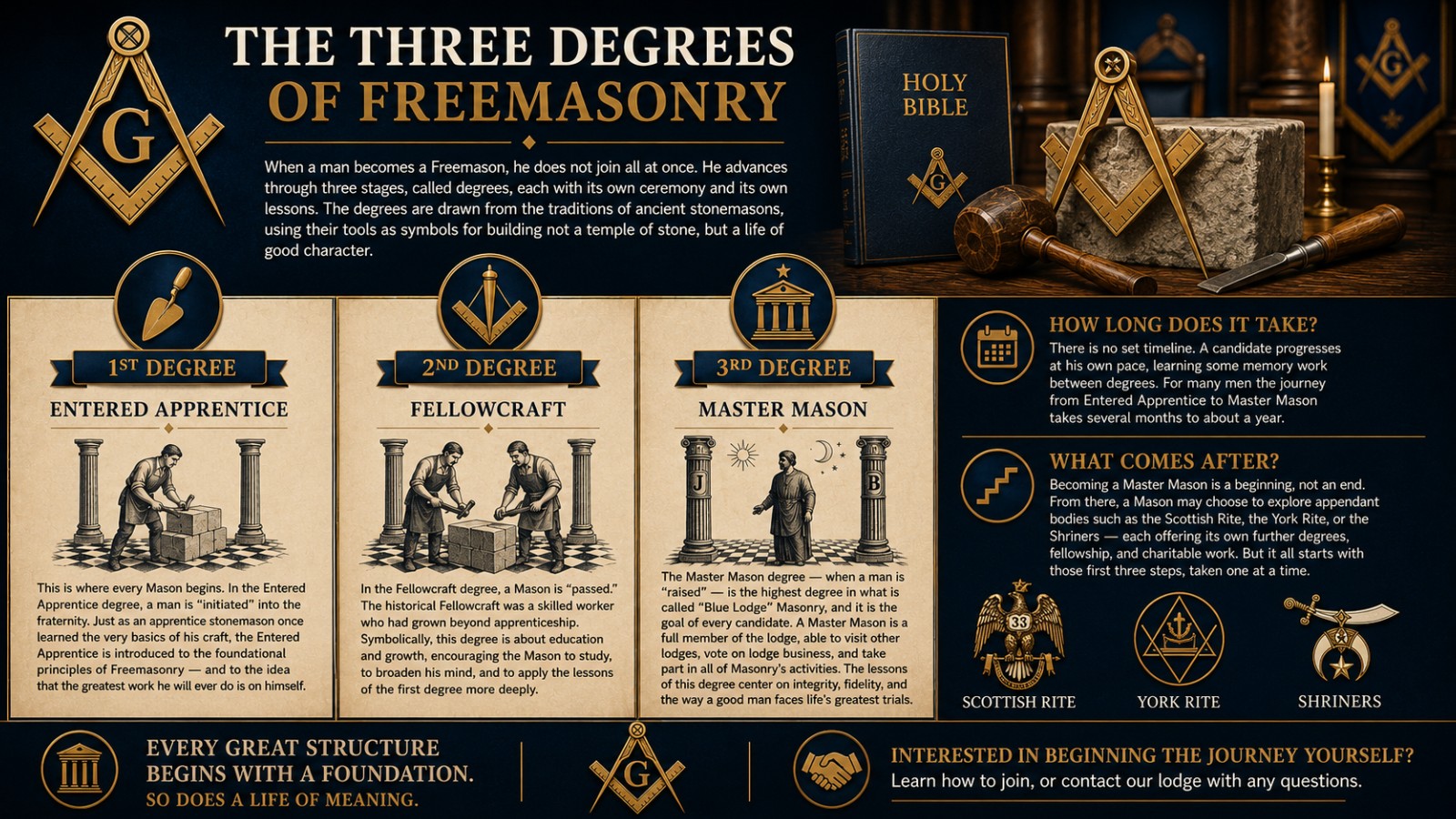
Every Freemason advances through three degrees — Entered Apprentice, Fellowcraft, and Master Mason. Here's what each one means and how long the journey takes.
When a man becomes a Freemason, he does not join all at once. He advances through three stages, called degrees, each with its own ceremony and its own lessons. The degrees are drawn from the traditions of ancient stonemasons, using their tools as symbols for building not a temple of stone, but a life of good character.
The First Degree: Entered Apprentice. This is where every Mason begins. In the Entered Apprentice degree, a man is "initiated" into the fraternity. Just as an apprentice stonemason once learned the very basics of his craft, the Entered Apprentice is introduced to the foundational principles of Freemasonry — and to the idea that the greatest work he will ever do is on himself.
The Second Degree: Fellowcraft. In the Fellowcraft degree, a Mason is "passed." The historical Fellowcraft was a skilled worker who had grown beyond apprenticeship. Symbolically, this degree is about education and growth, encouraging the Mason to study, to broaden his mind, and to apply the lessons of the first degree more deeply.
The Third Degree: Master Mason. The Master Mason degree — when a man is "raised" — is the highest degree in what is called "Blue Lodge" Masonry, and it is the goal of every candidate. A Master Mason is a full member of the lodge, able to visit other lodges, vote on lodge business, and take part in all of Masonry's activities. The lessons of this degree center on integrity, fidelity, and the way a good man faces life's greatest trials.
How long does it take? There is no set timeline. A candidate progresses at his own pace, learning some memory work between degrees. For many men the journey from Entered Apprentice to Master Mason takes several months to about a year.
What comes after? Becoming a Master Mason is a beginning, not an end. From there, a Mason may choose to explore appendant bodies such as the Scottish Rite, the York Rite, or the Shriners — each offering its own further degrees, fellowship, and charitable work. But it all starts with those first three steps, taken one at a time.
Interested in beginning the journey yourself? Learn how to join, or contact our lodge with any questions.